
Cosmetic dentistry is often associated with whitening or smile enhancement, but clinically, many cosmetic procedures also serve protective functions. Improving appearance and strengthening teeth frequently occur simultaneously when treatment is properly planned.
Moving Beyond Pure Aesthetics
From a professional perspective, cosmetic dentistry should be viewed as preventive and restorative as much as aesthetic.
Correcting Structural Weakness
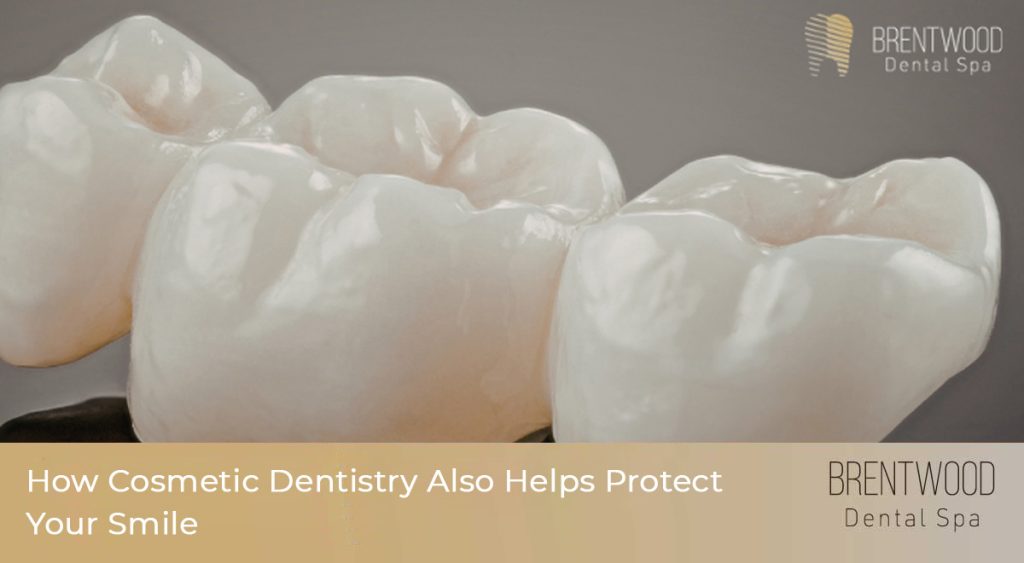
Procedures such as bonding, veneers, and crowns often reinforce teeth that have experienced wear, minor fractures, or enamel erosion. By restoring proper contours and thickness, these treatments help distribute biting forces more evenly.
Teeth that are chipped or uneven are more prone to further damage. Cosmetic correction can reduce stress concentration points that lead to cracks or fractures.
Improving Bite Alignment
Smile design frequently involves evaluating occlusion. Misaligned or uneven teeth can create excessive pressure in certain areas, accelerating wear and contributing to jaw discomfort.
Orthodontic alignment or carefully planned restorations can rebalance forces across the dental arch. This functional improvement protects enamel and reduces long-term complications.
Supporting Gum Health
Cosmetic procedures can also enhance periodontal health. Properly shaped restorations eliminate plaque-retentive areas and allow patients to clean more effectively. Closing small gaps or correcting irregular tooth contours can significantly improve hygiene accessibility.
Healthier gums provide stronger support for teeth and restorations alike.
Psychological Benefits That Influence Oral Health
An often overlooked aspect of cosmetic dentistry is behavioral change. Patients who feel confident in their smiles tend to maintain better hygiene habits and attend dental visits more consistently.
This increased engagement leads to earlier detection of problems and improved long-term stability.
A Preventative Philosophy
When cosmetic dentistry is approached thoughtfully, it becomes an investment in durability rather than vanity. Treatment planning considers enamel preservation, bite stability, and long-term maintenance.
The most successful cosmetic outcomes are those that enhance appearance while simultaneously protecting the underlying structures. In this way, cosmetic dentistry supports both confidence and oral health longevity.